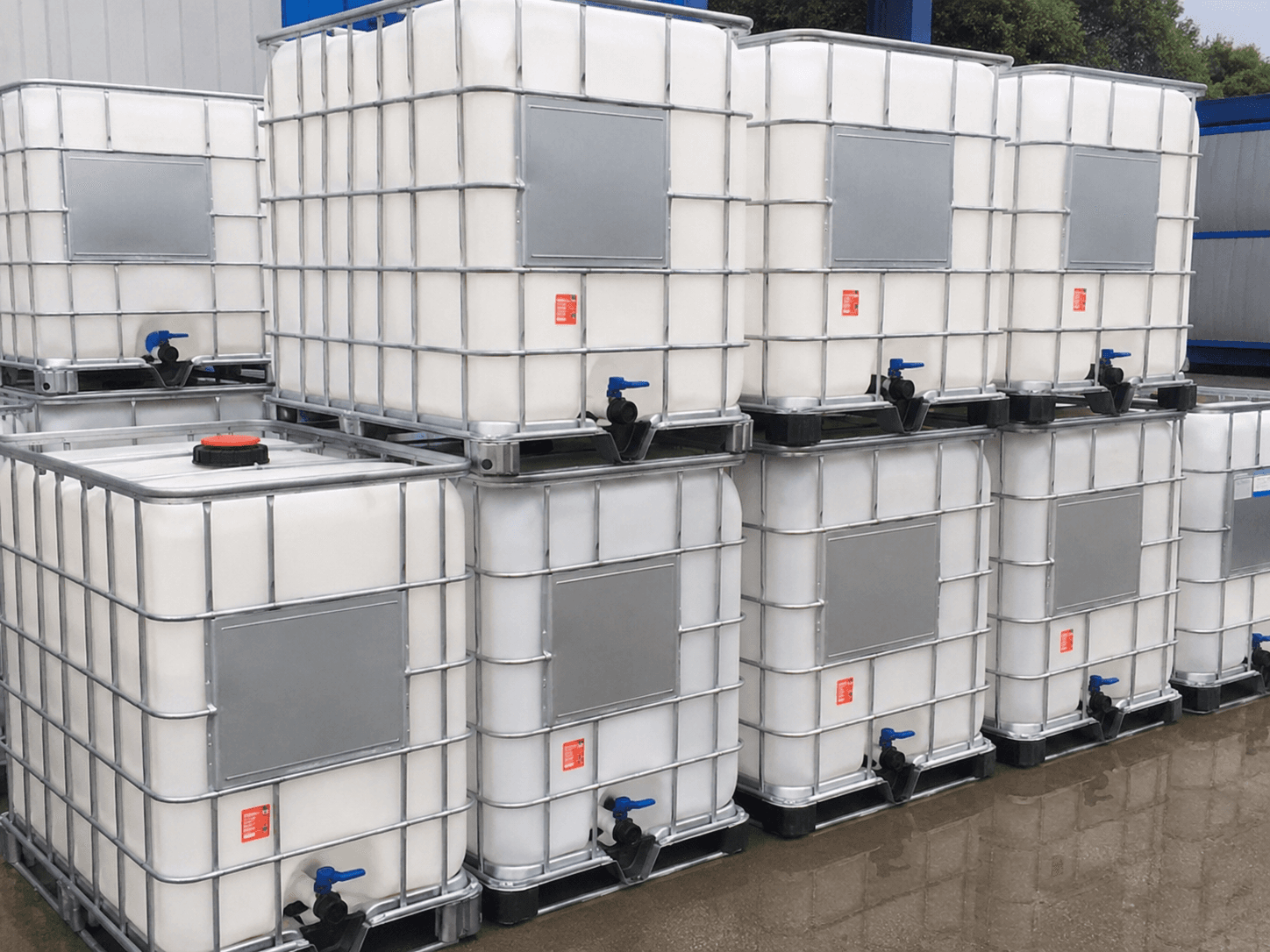
Rainwater catchment is one of the most popular second uses for IBC totes. The container is roughly the right size for a single-family roof, the price is right, and the form factor sits well next to most outbuildings.
The roof math
One inch of rain on a 1,000 sq ft roof yields about 600 gallons of catch (after a typical 5–10% efficiency loss). That is roughly two 330-gallon totes filled per inch.
For most North American climates, a 1,000 sq ft roof will fill two totes about once a month on average — sometimes in one storm, sometimes over a week. Plan for both extremes.
First-flush diversion
The first 10–20 gallons of any rain event carry the worst of the roof debris. Plumb a first-flush diverter inline before the catchment tote — a 4-inch PVC standpipe sized to capture the first 0.05 inches of rain across your roof area is the simple rule.
Multi-tote cascades
For larger catchment, stack totes in cascade with a top-fill / bottom-drain configuration:
- Tote 1: receives inflow from the gutter. Has a 2-inch overflow at the top side.
- Tote 2 (and beyond): receives the overflow line from Tote 1. Each subsequent tote has its own overflow.
- Last tote: overflow goes to drain / soak pit / rain garden.
- All totes share a common outlet manifold at the bottom for drawdown.
Which grade for rainwater
For non-potable rainwater (irrigation, livestock, washing) — used or rinsed totes are fine, just confirm prior contents were not toxic. For potable rainwater (drinking, cooking) — go reconditioned with a wash record, and treat the catchment side with UV or chlorination downstream.
UV and freeze
Cover or paint the totes — UV degrades HDPE within a year of direct outdoor exposure. For freeze regions: empty the totes for winter or insulate them; a 330-gallon tote of water frozen solid will blow the cage.