Long-form on
the small things
that matter.
Articles we wrote because the question kept coming up. Each one is the answer we wished we'd had to point at — written long, written specific, written by people who do the work.
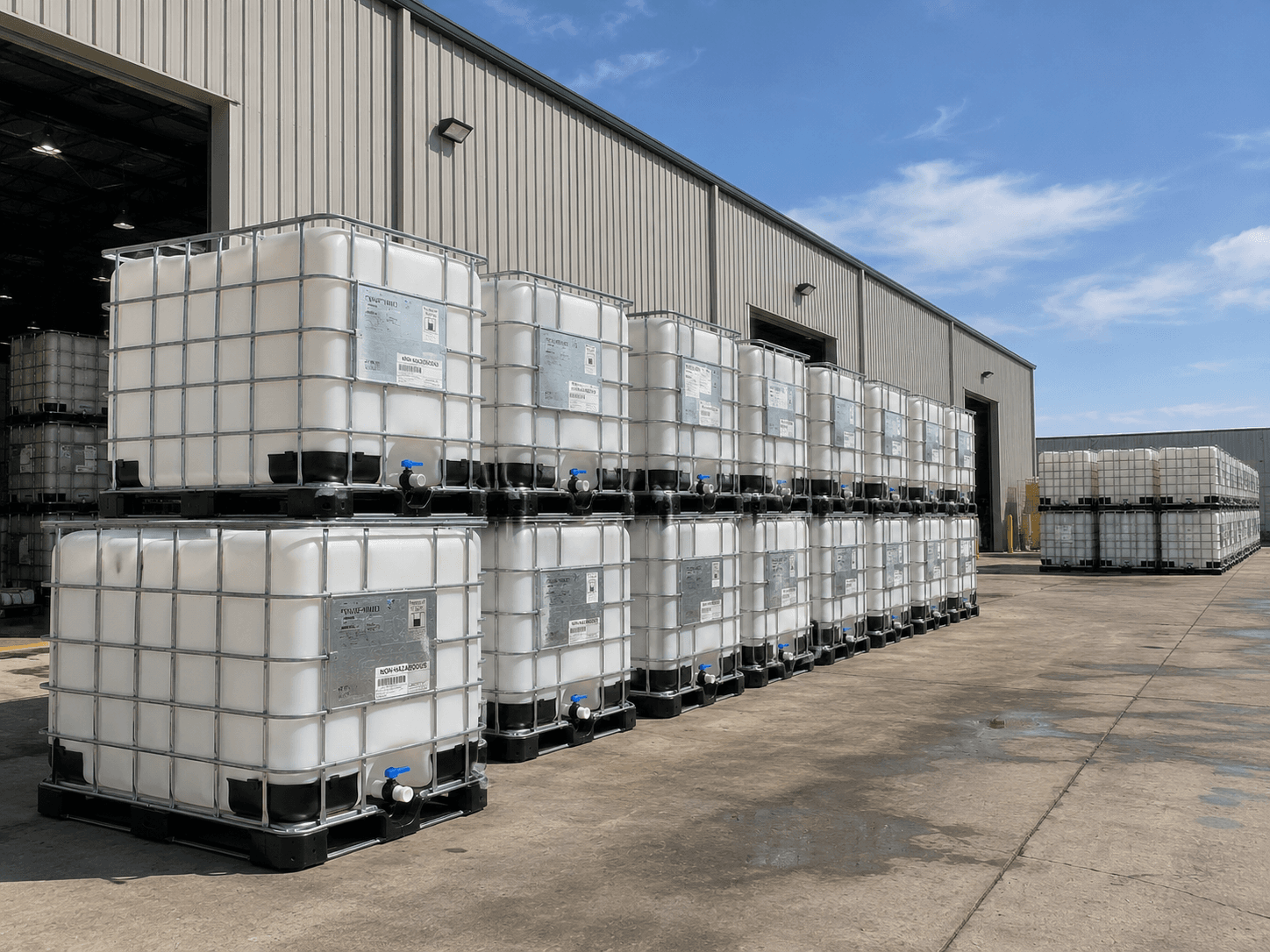
What "food-grade" actually means on a used IBC tote
There is no FDA stamp on the side of an IBC. Here is what "food-grade" actually means in this market, what the regulatory edges are, and what to ask for when it matters.
Read →Sizing a rainwater catchment system with IBC totes
A practical guide to picking, plumbing, and stacking IBC totes for residential and homestead rainwater harvest. Roof math, first-flush sizing, multi-tote cascade configurations.
Read →The realistic lifetime of an IBC tote
How long does an IBC tote actually last in service? What kills them? What extends their life? A field-tested look at the lifetime math behind reuse.
Read →Used vs reconditioned: which IBC tote should you actually buy?
A decision framework: when used is enough, when reconditioned pays back, when new is the only honest answer. Plus the cost-per-gallon math that drives most real decisions.
Read →What we cover, by category.
Specs & grades
What the labels mean. Reconditioned vs rinsed vs as-is. Food-grade certification. UN ratings. The differences a quote form doesn't capture.
Use cases
Rainwater, ag spray, brewery glycol, hot tubs, hugelkultur, on-site fuel. The application notes you can't find on a spec sheet.
Sustainability
Lifetime carbon math, recycling chain of custody, what "diverted from landfill" actually means when somebody puts it in an annual report.
Buying
How to compare quotes, what to look for in person, when to walk away, how to ask for photos of the actual unit you'll receive.
Freight & logistics
Trailer math, double-stacking, lift-gate vs dock, residential delivery, the fuel-surcharge story.
Reconditioning & repair
What hot-wash actually does. Gasket selection. Valve swaps. The DIY-vs-send-it-back decision tree.
Regulatory
49 CFR for transport. FDA 21 CFR for food contact. The state-by-state wrinkles around rainwater capture and on-site fuel.
The yard
Operational pieces — route planning, wash-bay throughput, the things we've learned by doing this for five-plus years.
Curated by who you are.
Reporting-ready reading.
Lifetime math, the recycling chain-of-custody piece, the "what counts as diversion" explainer. Forty minutes, three sources, one defensible footnote.
The food-grade triangle.
The food-grade explainer, the wash-record walkthrough, the gasket-selection notes. If you're moving consumable liquids in totes, this is non-optional reading.
Rainwater & off-grid.
Rainwater sizing math, UV degradation notes, the "painting the cage" field piece, the valve-and-fitment reference. About 50 minutes if you measure your roof along the way.
What this library actually is.
How a piece gets onto this page.
An article gets written when the same question hits the inbox three or four times in a quarter, or when we've learned something in the yard that the rest of the industry seems to have wrong. Every piece is drafted by one of the three operators, edited by the other two, fact-checked against either a regulator document or a manufacturer spec sheet, and dated when it goes up.
We do not publish to a content calendar. Some months we publish three pieces; some months we publish none because nothing in the yard surprised us. We do not pay for guest content. We do not run sponsored posts. If we link to a vendor, it's because we use them — never because they paid for the link.
When we're wrong, we add a correction line at the bottom of the piece with the date and a credit to whoever caught it. We've done this 11 times in two years; readers catch more than we'd like to admit.
Where the numbers in these pieces come from.
Regulatory. 49 CFR Subchapter C (hazardous materials transport), FDA 21 CFR Part 177 (food-contact polymers), EPA RCRA for the hazardous-waste edges, and the relevant state statutes for rainwater and on-site fuel.
Manufacturer. Spec sheets from Schütz, Mauser, Greif, Hoover-Ferguson, and Snyder. We read the data sheets, not the marketing brochures.
Operational. Our own intake records since 2017 — ~14,000 totes through the wash bay, with notes on prior-contents categories, failure modes, gasket lifespans, and freight density. When we cite a percentage or an average, it comes from this dataset unless noted otherwise.
Wrote about it so we don't have to email it again.
Every article on this page exists because answering the same question fifteen times started feeling silly. We write it once, link to it forever, and the inbox gets a little quieter every quarter.