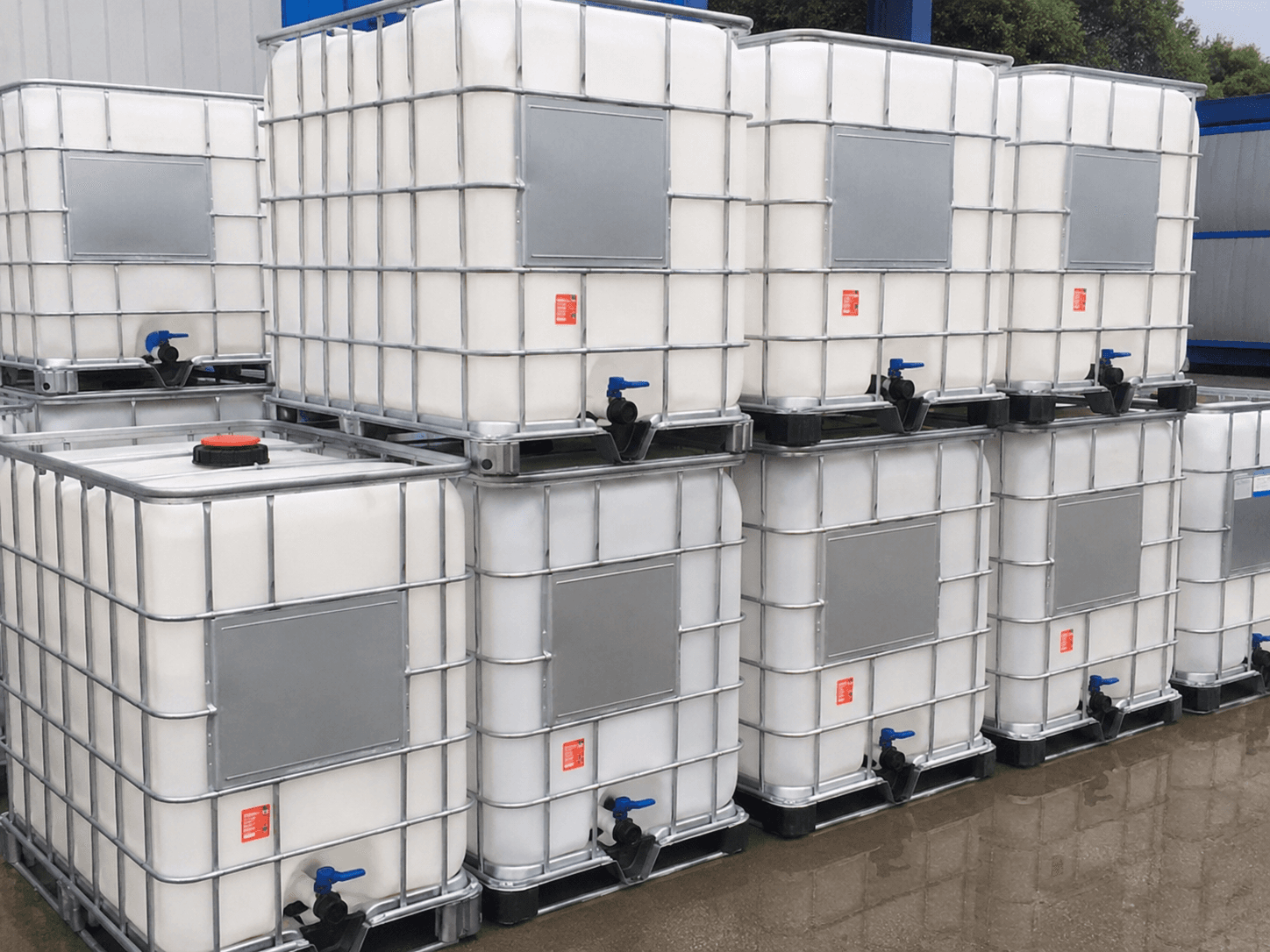
The cost difference between used, reconditioned, and new IBC totes is usually 2–3× across the range. That makes the grade choice the single most important spec decision. Here is how to actually make it.
Start with the question: what goes in next?
The grade is downstream of the next use. Walk through the four-question filter:
- Will the contents be human or animal edible? If yes → reconditioned food-grade at minimum.
- Will the contents touch regulated processes (pharma, certain pediatric, etc.)? If yes → new.
- Will the contents be aggressive solvents, hot fill, or long-storage? If yes → stainless steel.
- Anything else (ag, fuel, water, rainwater, jobsite, industrial) → used or as-is.
The cost-per-gallon math
Look at price per gallon of storage rather than per tote — it normalizes 275 vs 330 and exposes when grades stop making sense:
- As-is used tote: cheapest per gallon, but you may need to wash and replace gaskets yourself.
- Rinsed used tote: best dollar-to-quality ratio for industrial uses.
- Reconditioned: ~1.5× the cost of rinsed, but matched-equivalent to new for almost every application.
- New: 2–3× the cost of reconditioned, only worth it for the cases above.
The carbon math
Every used or reconditioned tote you choose over a new one avoids approximately 720 lb of CO₂e. If your organization tracks Scope 3 emissions, this is a real lever and a real line item.
The lazy honest default
For ~90% of buyers, the right answer is "reconditioned, food-grade if anything edible is involved, used/rinsed for anything industrial." That covers almost every scenario without overspending or overshopping.